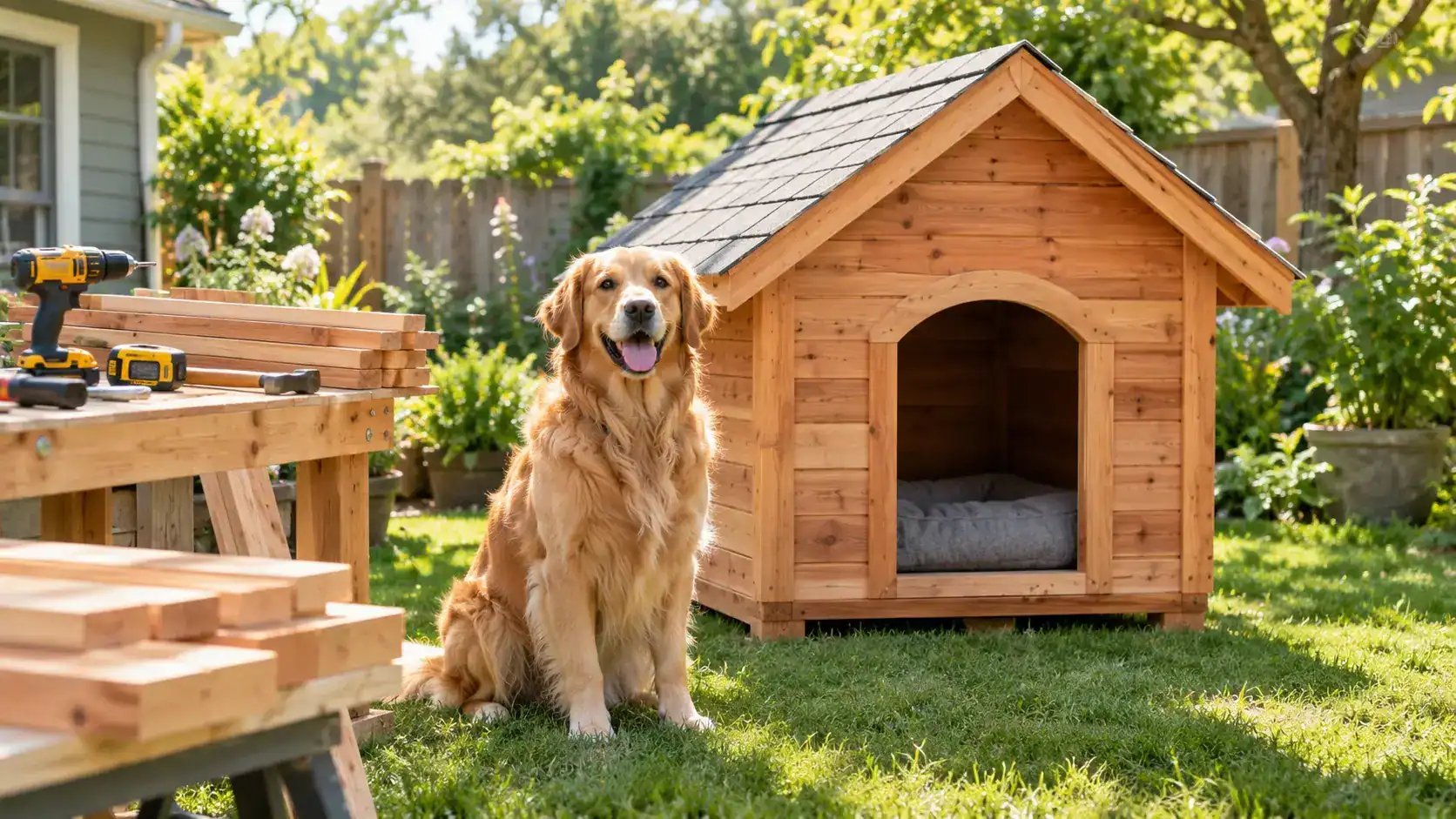
Finding the right dog house plans can save you money and give your dog a shelter built exactly for their needs. A well-made dog house protects your pet from rain, wind, summer heat, and winter chill, and it gives them a quiet space to call their own. The best part is that you don’t need advanced carpentry skills. With basic tools, a few boards, and a free weekend, you can build a sturdy outdoor shelter your dog will actually use.
This guide walks you through how to size a dog house, which materials are safe, and five DIY designs, from a simple small-dog shelter to an insulated winter retreat.
Before You Build: How to Choose the Right Size
A dog house that is too big won’t hold body heat in winter, and one that is too small leaves your dog cramped and uncomfortable. Start by taking three measurements:
- Length: from the tip of the nose to the base of the tail
- Height: from the floor to the top of the head or ears while standing
- Width: across the widest part of the chest
As a general rule, the interior should be about 25% longer and wider than your dog’s body length, with a ceiling roughly 25% taller than your dog’s standing height. The door opening should be tall enough for your dog to walk in without ducking too low, and about two inches wider than their chest.
Your dog should be able to stand up, turn around, and lie down fully stretched out. That is all the space they need, and anything bigger only makes the house harder to keep warm.
Best Materials for a Dog House
The material you choose affects durability, insulation, and your dog’s safety.
- Cedar and pine: naturally resistant to moisture and rot. Cedar is the better choice but costs more.
- Exterior-grade plywood: affordable and strong, and it works well for walls, floors, and roofs.
- Asphalt shingles or metal roofing: these keep rain out and last for years.
- Foam board insulation: useful for cold climates, but always cover it so your dog can’t chew it.
- Non-toxic sealant or paint: choose pet-safe products only, and let them dry completely before your dog goes inside.
Avoid pressure-treated lumber for the interior, because the chemicals used in it can be harmful if your dog chews the wood.
Tools You Will Need
Most of these plans use the same basic toolkit: a circular saw or handsaw, a power drill, a tape measure, a carpenter’s square, sandpaper, a hammer, and exterior wood screws. Wear safety glasses when cutting, and sand every edge smooth so your dog never gets splinters.
Plan 1: Classic Gable-Roof Dog House (Medium Dogs)
The gable-roof design is the most popular of all dog house plans because it sheds water well and looks like a small cottage. It suits medium dogs such as Beagles, Cocker Spaniels, and Bulldogs.
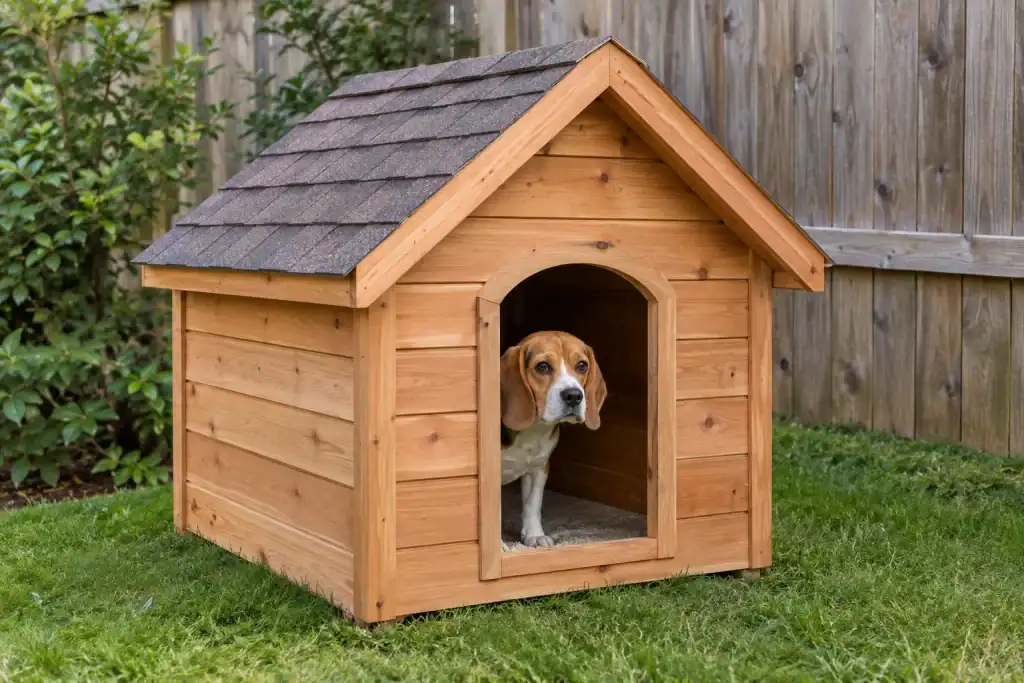
Approximate dimensions: 36″ long x 28″ wide x 30″ tall at the peak
Materials: four sheets of ¾” exterior plywood, 2×2 lumber for the frame, roofing shingles, and wood screws
Difficulty: Beginner to intermediate | Time: About 5 hours
How to build it:
- Cut the floor, two side walls, the front and back panels, and two roof panels.
- Build a simple 2×2 frame and attach the floor to it, raising the base a few inches off the ground.
- Attach the side walls, then the front and back panels. Cut the door opening in the front panel before assembly.
- Angle the front and back tops into a triangle shape to create the gable.
- Attach the two roof panels so they overhang the walls by about two inches.
- Add shingles, seal the seams, and sand every edge.
A slightly overhanging roof keeps rain from running down the front and into the doorway.
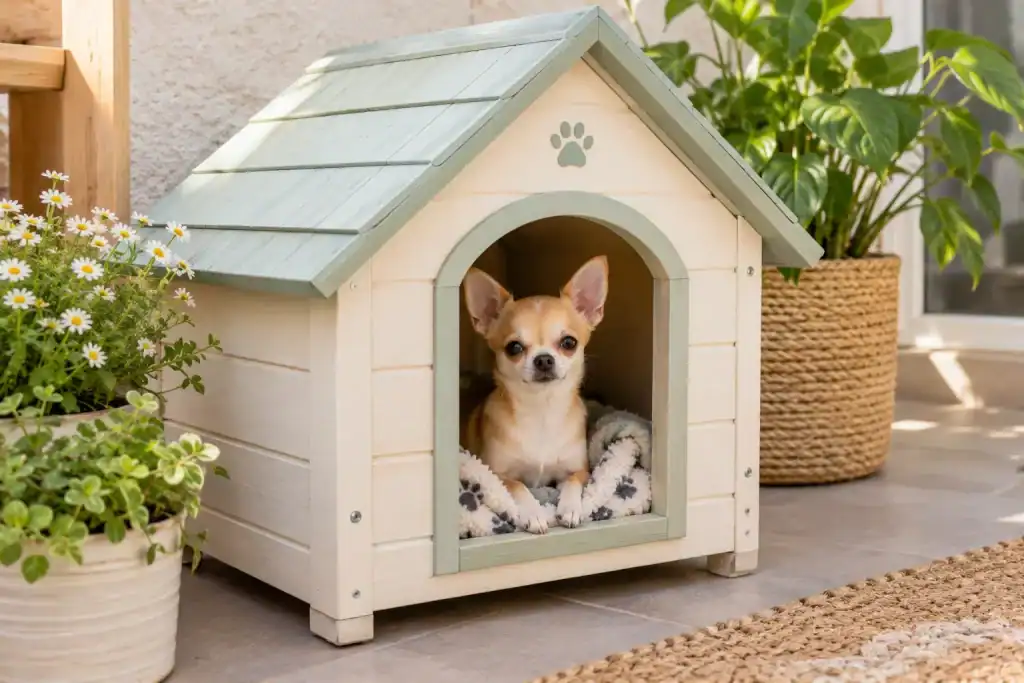
Plan 2: Simple Small Dog House (Chihuahuas, Yorkies, and Toy Breeds)
Small dogs need less space and tend to get cold more easily, so this plan keeps the footprint compact and snug.
Approximate dimensions: 24″ long x 18″ wide x 20″ tall
Materials: one sheet of ½” exterior plywood, pine trim, wood glue, and screws
Difficulty: Beginner | Time: About 3 hours
How to build it:
- Cut all six panels from a single plywood sheet, which keeps your costs low.
- Cut a small arched or rectangular door in the front panel.
- Glue and screw the walls to the floor, then attach the roof.
- Add a hinged roof section if you want easy access for cleaning.
- Paint the outside with pet-safe paint to protect it from moisture.
Because the house is small, adding a soft blanket or washable pad inside makes it feel cozy without needing extra insulation.
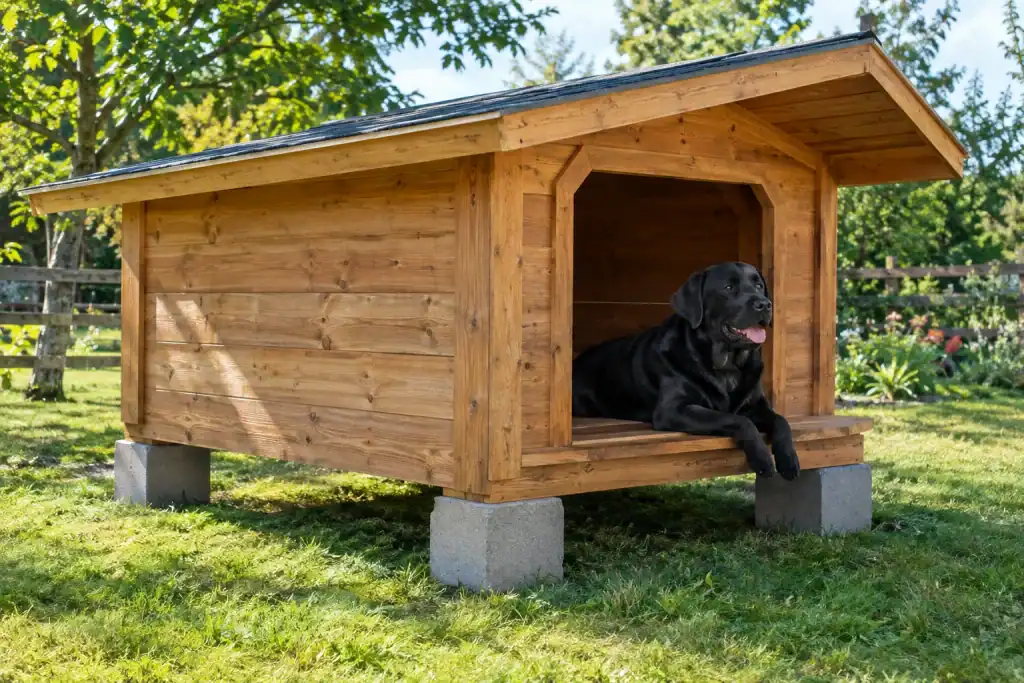
Plan 3: Large Dog House With a Raised Floor (Labradors, Shepherds, and Retrievers)
Big dogs need serious space and a sturdy structure. A raised floor is important here, because it prevents moisture from soaking up from the ground and keeps the interior drier and cooler.
Approximate dimensions: 48″ long x 36″ wide x 38″ tall
Materials: 2×4 lumber for the base and frame, ¾” plywood panels, roofing material, and heavy-duty screws
Difficulty: Intermediate | Time: 6 to 8 hours
How to build it:
- Build a strong 2×4 base frame and set it on concrete blocks or short legs, about 4 to 6 inches off the ground.
- Lay the plywood floor over the frame and secure it firmly.
- Attach the walls and leave a wide door opening, with a small raised threshold to stop rain from running inside.
- Build a pitched roof with a generous overhang, because big dogs often rest near the entrance.
- Add a few small vent holes high on the side walls for airflow.
This design is also a good fit for hot climates, since the air flowing under the floor helps prevent overheating.
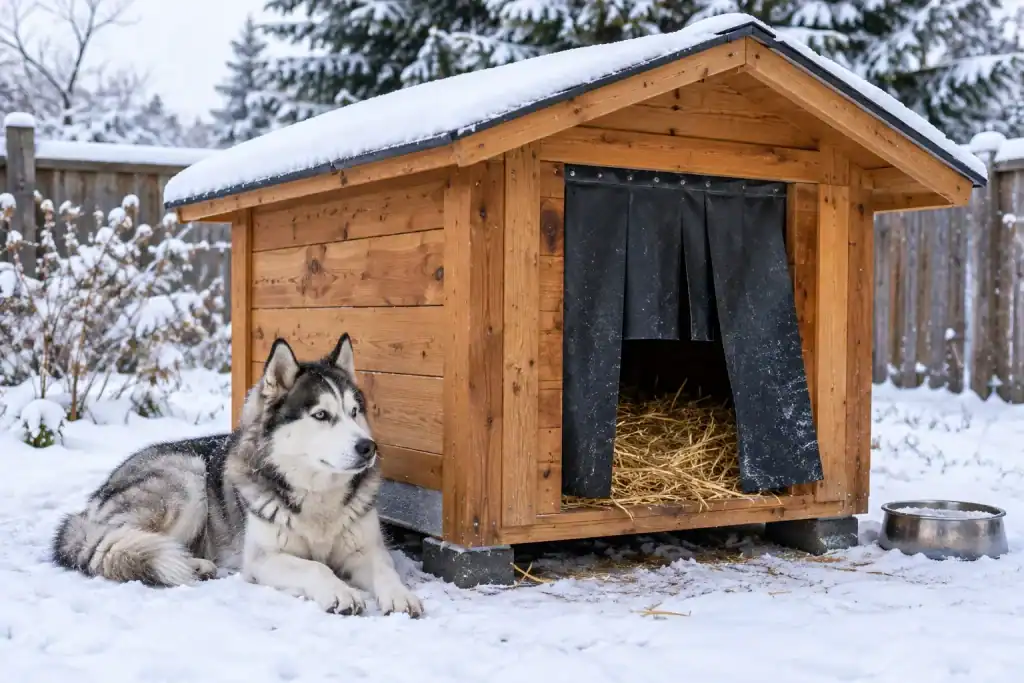
Plan 4: Insulated Dog House for Cold Weather
If you live somewhere with freezing winters, an insulated dog house is worth the extra effort. Insulation traps your dog’s own body heat, which means no electric heater is needed in mild cold.
Approximate dimensions: Sized to your dog, using the 25% rule above
Materials: a double wall of plywood, rigid foam insulation boards, a door flap made of heavy vinyl or rubber, and weatherproof sealant
Difficulty: Intermediate | Time: 6 to 8 hours
How to build it:
- Build the outer shell using any gable or flat-roof plan above.
- Cut foam insulation boards to fit between the studs and fill every wall, the roof, and the floor.
- Cover the foam completely with an inner layer of plywood, so your dog can’t reach or chew it.
- Install a flap over the doorway to block wind, and angle the entrance away from the prevailing wind.
- Seal every gap and seam to keep drafts out.
Add straw or a thick bed inside, and avoid blankets that stay damp, since wet bedding pulls heat from your dog’s body. A small, snug interior stays warmest, so don’t oversize this plan.
Plan 5: Budget Pallet Dog House
Looking for dog house plans that cost almost nothing? A pallet dog house is a smart way to reuse materials you may already have at home.
Approximate dimensions: Roughly 32″ long x 24″ wide x 26″ tall, depending on your pallets
Materials: two or three heat-treated pallets, screws, a roofing sheet, and sandpaper
Difficulty: Beginner | Time: 3 to 4 hours
How to build it:
- Choose pallets stamped “HT” for heat treated. Avoid any marked “MB,” which means they were treated with a chemical fumigant.
- Take one pallet apart and use the boards to close the gaps on the others.
- Assemble the walls and floor, then cut a doorway into the front.
- Attach a simple sloped roof using plywood or a corrugated panel.
- Sand every rough surface thoroughly, because pallet wood is prone to splinters, then seal it with a pet-safe finish.
This plan is rustic, but with a little paint it looks charming in any yard.
Safety and Comfort Tips for Any Dog House
Whichever plan you choose, a few small details make a big difference to your dog’s wellbeing:
- Placement: set the house in a shaded spot, on level ground, away from standing water.
- Door direction: face the entrance away from wind and rain.
- Ventilation: small vents near the roofline prevent stuffiness and moisture buildup.
- Bedding: use washable pads in summer and dry straw or thick bedding in winter.
- Cleaning: wipe the interior down regularly and check for loose nails, damaged boards, or signs of chewing.
- Introduce it gradually: place a favorite toy or treat inside so your dog connects the house with good feelings.
A dog house is a place to rest, not a replacement for family time. Dogs still need company, exercise, and proper shelter indoors during extreme weather.
Final Thoughts
The right dog house plans depend on your dog’s size, your climate, and your budget. A small house suits toy breeds, a raised-floor design keeps large dogs dry, an insulated build handles winter, and a pallet project stays easy on your wallet. Whichever you pick, take accurate measurements, use pet-safe materials, and finish every surface smoothly.
Once your dog’s new shelter is ready, you can keep improving their daily care with our guides on and Best Vegetables for Dogs.