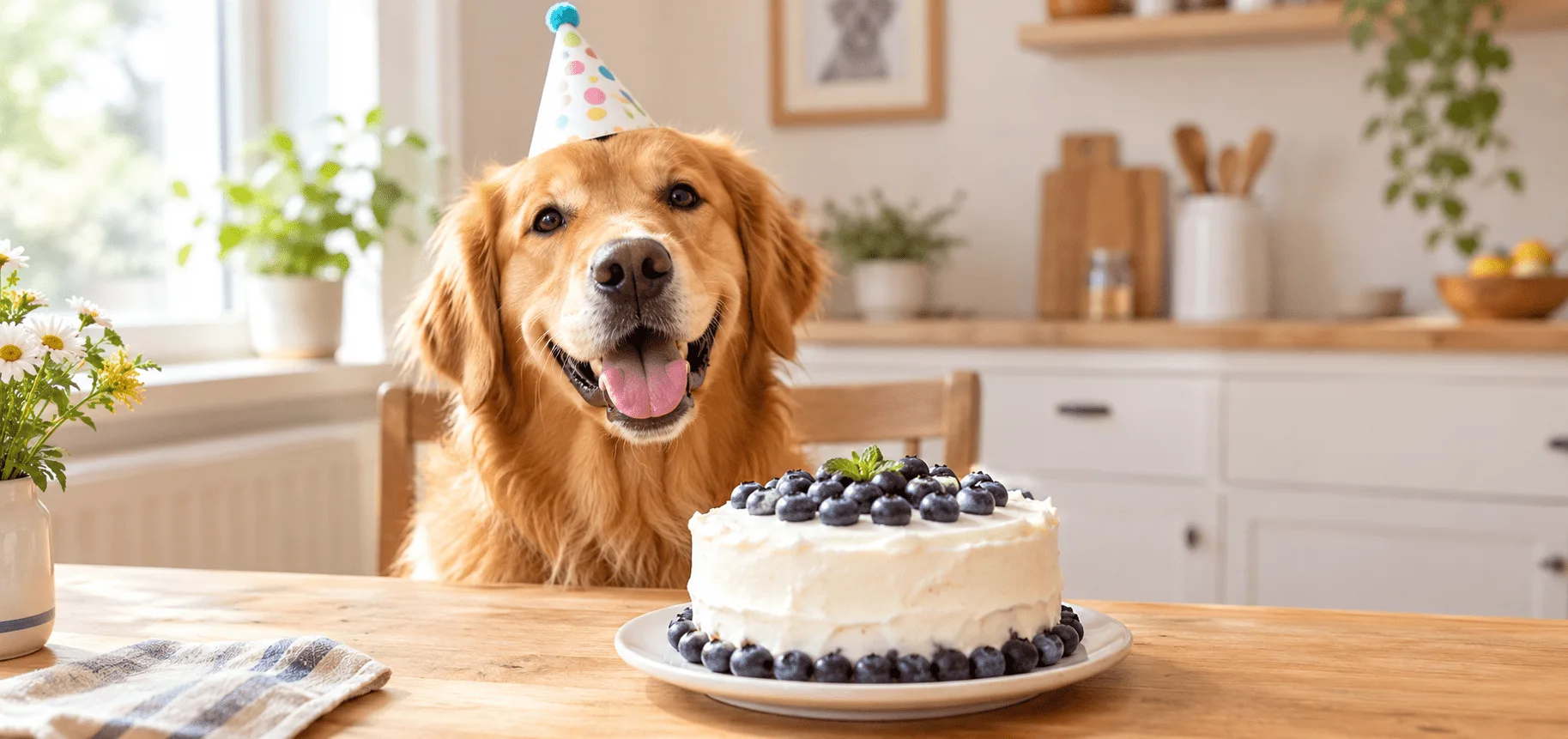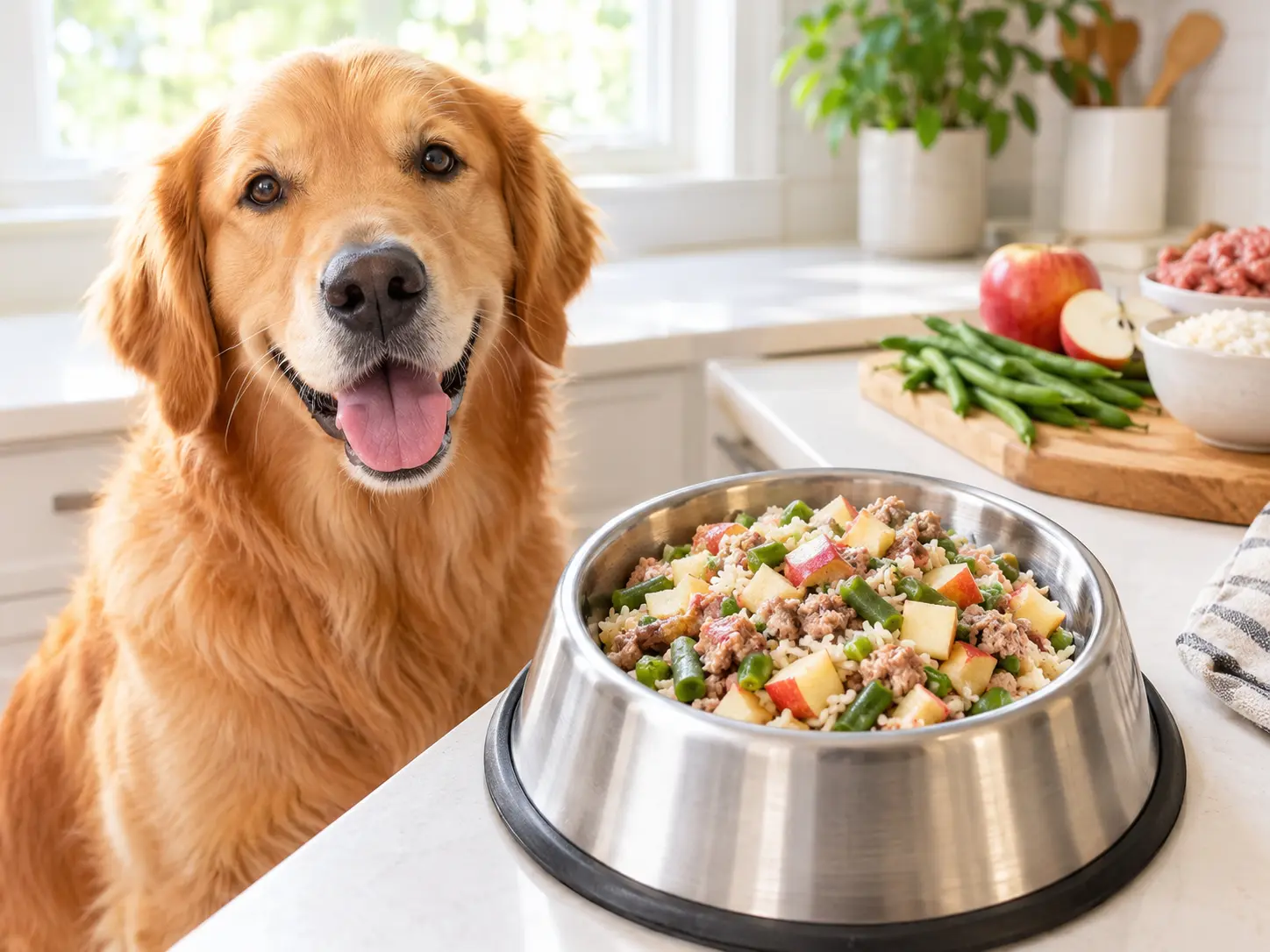
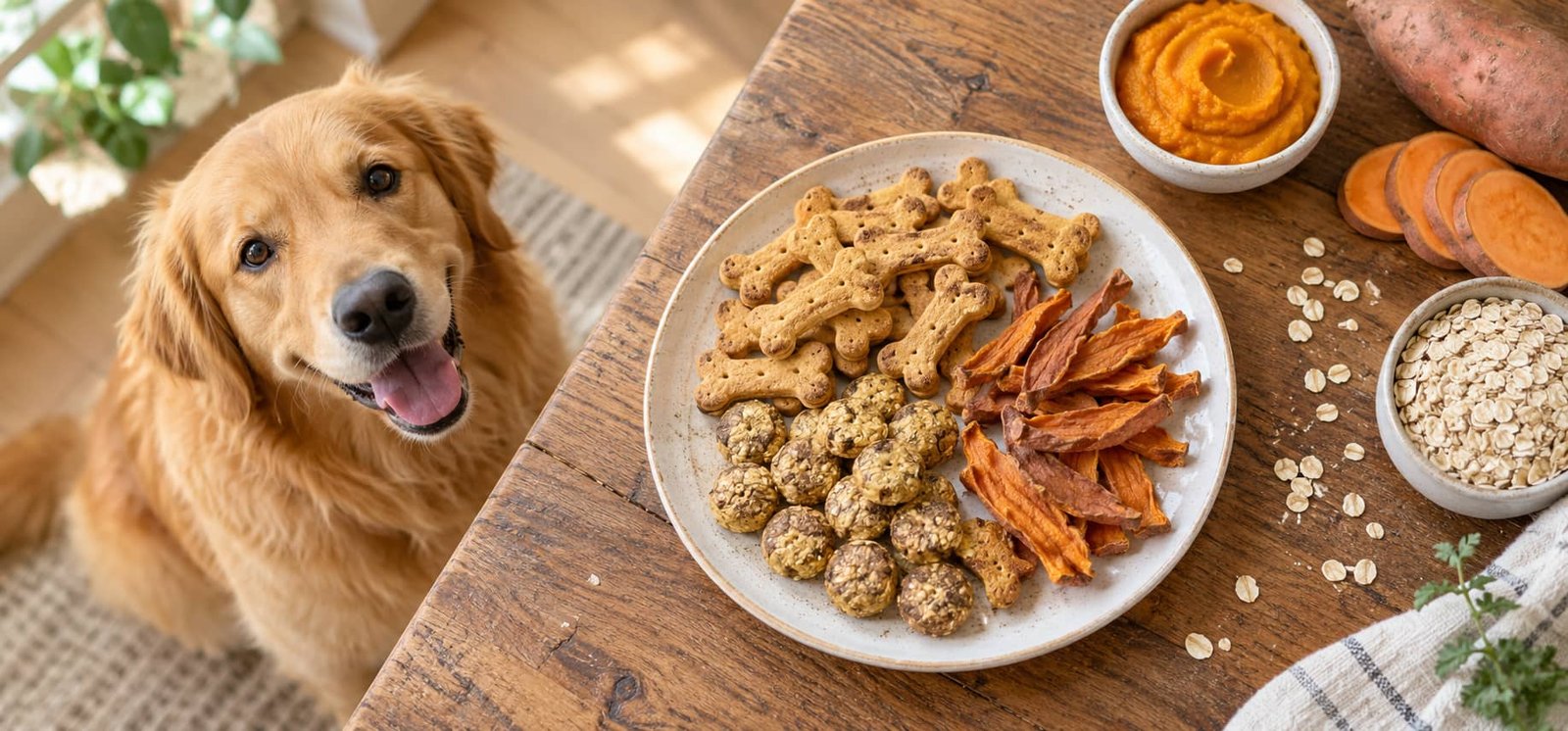
Looking for homemade dog treats recipes vet approved and made with simple ingredients? Store-bought treats often come with long ingredient lists, fillers, and added sugar, while making your own gives you full control over what your dog eats. This guide shares five easy recipes built from ingredients veterinarians widely consider safe, so you can bake with confidence. Every recipe uses pantry staples and works for most healthy adult dogs.
Why Make Homemade Dog Treats?
When you bake at home, you know every ingredient that goes into the bowl. That matters for dogs with allergies, sensitive stomachs, or weight problems, because you can skip artificial colors, preservatives, and unnecessary additives.
Homemade treats are also budget-friendly. A bag of oats, a can of pumpkin, and a jar of peanut butter can make dozens of healthy dog treats for the price of one small store-bought bag.
There is a bonus too: baking for your dog is a fun way to bond, and many dogs get excited just watching you in the kitchen.
What Does “Vet-Approved” Actually Mean?
Store-bought treats often come with long ingredient lists, fillers, and added sugar. Making your own gives you full control over what your dog eats. This guide shares five homemade dog treats recipes built from vet-approved ingredients, so you can bake with confidence. Every recipe is simple, uses pantry staples, and works for most healthy adult dogs.
Safe Ingredients for Healthy Homemade Dog Treats
Most dog-safe recipes are built from a short list of wholesome ingredients:
- Pumpkin puree (plain, not pie filling): supports digestion and is rich in fiber
- Sweet potato: a good source of fiber and vitamins
- Oats and whole wheat or rice flour: the base for baked biscuits
- Peanut butter: a favorite flavor, but it must be xylitol-free
- Bananas and blueberries: natural sweetness without added sugar
- Plain cooked chicken and eggs: lean protein for savory treats
- Carrots and apples (no seeds): crunchy, low-calorie options
Foods to Never Put in Dog Treats
Safety comes before flavor. Keep these ingredients out of every recipe:
- Xylitol: an artificial sweetener found in some peanut butters and yogurts that is highly toxic to dogs. Always read the label.
- Chocolate and cocoa
- Grapes and raisins
- Onions, garlic, and chives
- Macadamia nuts
- Excess salt, sugar, and added spices
If your dog eats something on this list, contact your vet or a pet poison helpline right away.
Recipe 1: Peanut Butter Pumpkin Homemade Dog Treats
This classic is one of the most popular homemade dog treats because dogs love the flavor and pumpkin is gentle on the stomach.
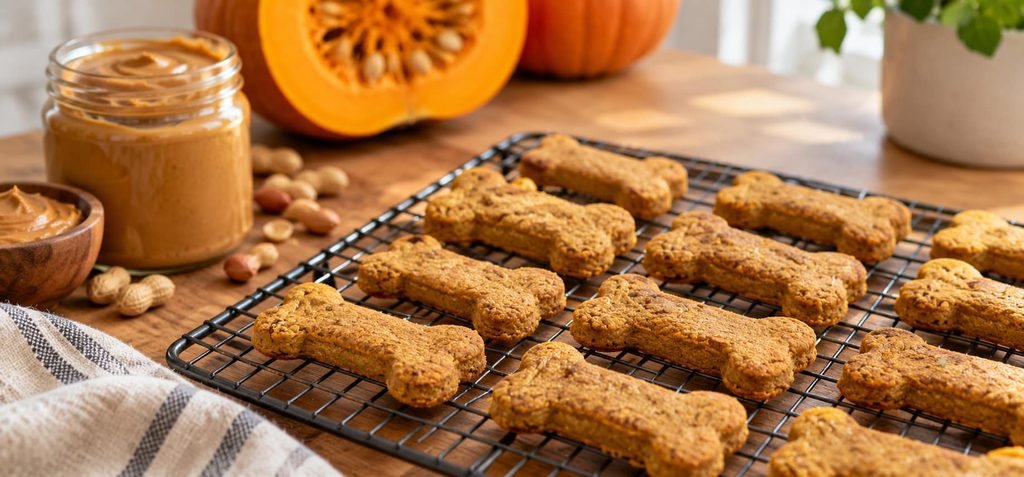
Ingredients
- 2½ cups whole wheat flour (or oat flour)
- ½ cup plain pumpkin puree
- 2 eggs
- ⅓ cup xylitol-free peanut butter
- 2 to 3 tablespoons water, if needed
Instructions
- Preheat the oven to 350°F (175°C) and line a baking sheet with parchment paper.
- Mix the pumpkin, peanut butter, and eggs in a bowl.
- Stir in the flour until a stiff dough forms. Add water a little at a time if it is too dry.
- Roll the dough to about ¼ inch thick and cut it into small shapes.
- Bake for 15 to 20 minutes until firm, then cool completely.
Storage: Keep in an airtight container for up to 1 week, or freeze for up to 3 months.
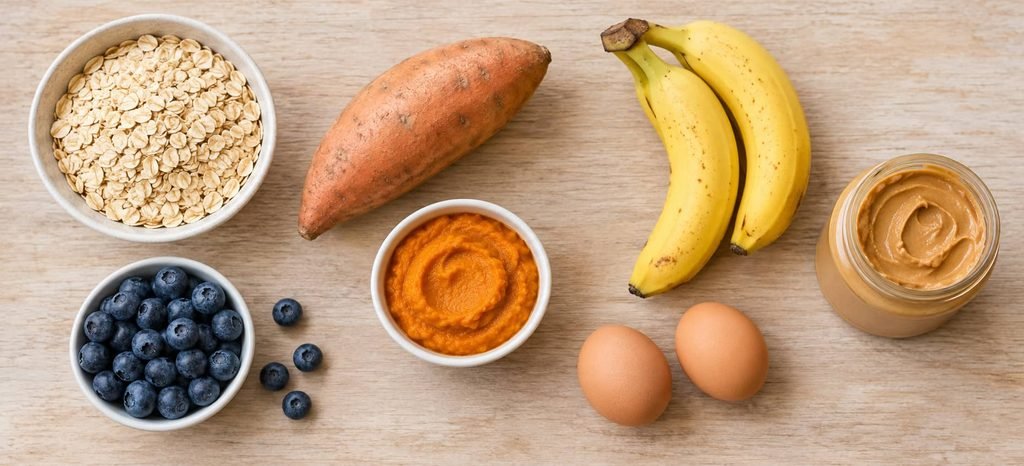
Recipe 2: 3-Ingredient Banana Oat Dog Treats
Short on time? These easy dog treats need only three ingredients and almost no prep.
Ingredients
- 2 ripe bananas, mashed
- 2 cups rolled oats (blend into a coarse flour for a smoother texture)
- ¼ cup xylitol-free peanut butter
Instructions
- Preheat the oven to 350°F (175°C).
- Mash the bananas and mix in the peanut butter.
- Add the oats and stir until the dough holds together.
- Scoop small balls onto a lined tray and flatten them slightly.
- Bake for 15 minutes, then let them cool.
Storage: Refrigerate for up to 5 days. These are softer, so freeze extras.
Recipe 3: Chewy Sweet Potato Dog Treats
Sweet potato chews are a natural, single-ingredient option and a great choice for dogs that prefer a chewy texture over a hard biscuit.
Ingredients
- 2 medium sweet potatoes
Instructions
- Preheat the oven to 250°F (120°C).
- Wash the sweet potatoes and slice them lengthwise into strips about ¼ inch thick.
- Arrange the strips on a lined baking sheet without overlapping.
- Bake for 2 to 3 hours, flipping halfway, until chewy but not burnt.
- Cool completely before serving.
Storage: Store in the refrigerator for up to 2 weeks. Serve smaller pieces to small dogs and supervise chewing.
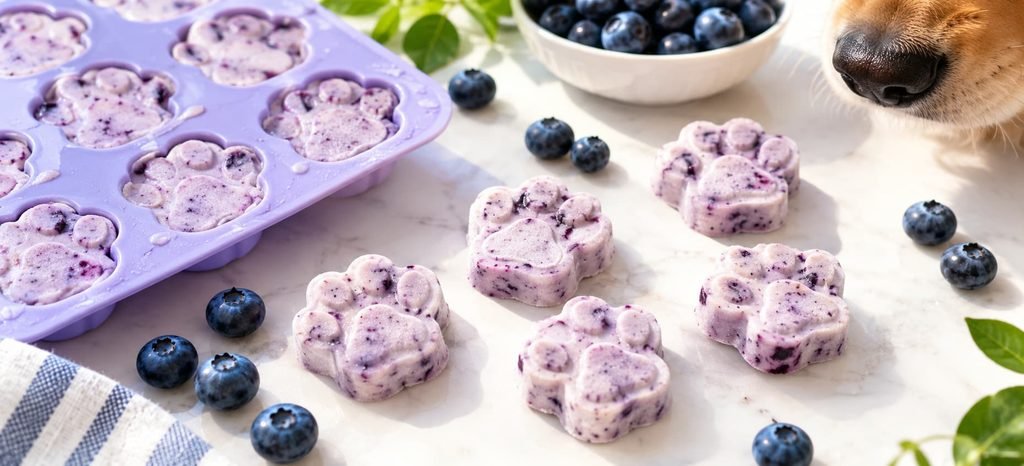
Recipe 4: Frozen Blueberry Yogurt Dog Treats
Frozen dog treats are perfect for hot days, and blueberries add antioxidants without added sugar.
Ingredients
- 1 cup plain, unsweetened yogurt (check that it contains no xylitol)
- ½ cup blueberries
- 1 tablespoon water or unsalted bone broth (optional)
Instructions
- Lightly mash the blueberries and stir them into the yogurt.
- Spoon the mixture into a silicone mold or ice cube tray.
- Freeze for at least 4 hours.
- Pop the treats out and serve right away.
Note: Some dogs are sensitive to dairy. Start with a small amount, and skip this recipe if your dog is lactose intolerant.
Recipe 5: Chicken and Rice Treats for Sensitive Stomachs
These bland, simple treats suit dogs with sensitive stomachs, since they use easily digestible ingredients.
Ingredients
- 1 cup plain cooked chicken, finely shredded (no seasoning, skin, or bones)
- 1 cup cooked white rice
- 1 egg
- ½ cup rice flour
Instructions
- Preheat the oven to 350°F (175°C).
- Combine the chicken, rice, and egg in a bowl.
- Mix in the rice flour until the dough is thick enough to form small balls.
- Place the balls on a lined tray and press them flat.
- Bake for 20 minutes until firm, then cool.
Storage: Because of the cooked chicken, refrigerate and use within 3 to 4 days, or freeze in small batches.
How Many Treats Can a Dog Have?
Treats should make up no more than about 10 percent of your dog’s daily calories, with the rest coming from complete and balanced dog food. For small dogs, that can mean just one or two tiny treats a day. Break biscuits into smaller pieces, and count treats during training sessions as part of the daily total.
Introduce any new treat slowly. Offer a small portion first and watch for vomiting, diarrhea, itching, or other signs of an allergic reaction.
Tips for Baking and Storing Dog Treats
- Skip the salt, sugar, and spices. Dogs do not need them.
- Cut treats small. Smaller pieces are safer, easier to digest, and better for training.
- Dry them well. Moisture leads to mold, so cool treats fully and bake until firm.
- Label and date your batches, especially when you freeze them.
- Throw out anything moldy or older than the storage times above.
When to Talk to Your Vet
Check with your vet before feeding homemade treats if your dog is a puppy, is overweight, is on a prescription diet, or has diabetes, pancreatitis, kidney disease, or known food allergies. Your vet can recommend the right ingredients and portion sizes for your dog’s needs.
Final Thoughts
Healthy homemade dog treats do not need to be complicated. With simple ingredients like pumpkin, oats, sweet potato, and blueberries, you can bake safe, tasty rewards your dog will love. Use these homemade dog treats recipes with vet-approved ingredients as a starting point, keep the toxic foods out of your kitchen, and always match treats to your dog’s own health needs.
Which recipe will you try first? Save this guide on Pinterest so you can come back to it on your next baking day.
Treats are only a small part of your dog’s diet, so if you enjoy cooking for your pup, you can also prepare a full meal with this easy crockpot dog food recipe.