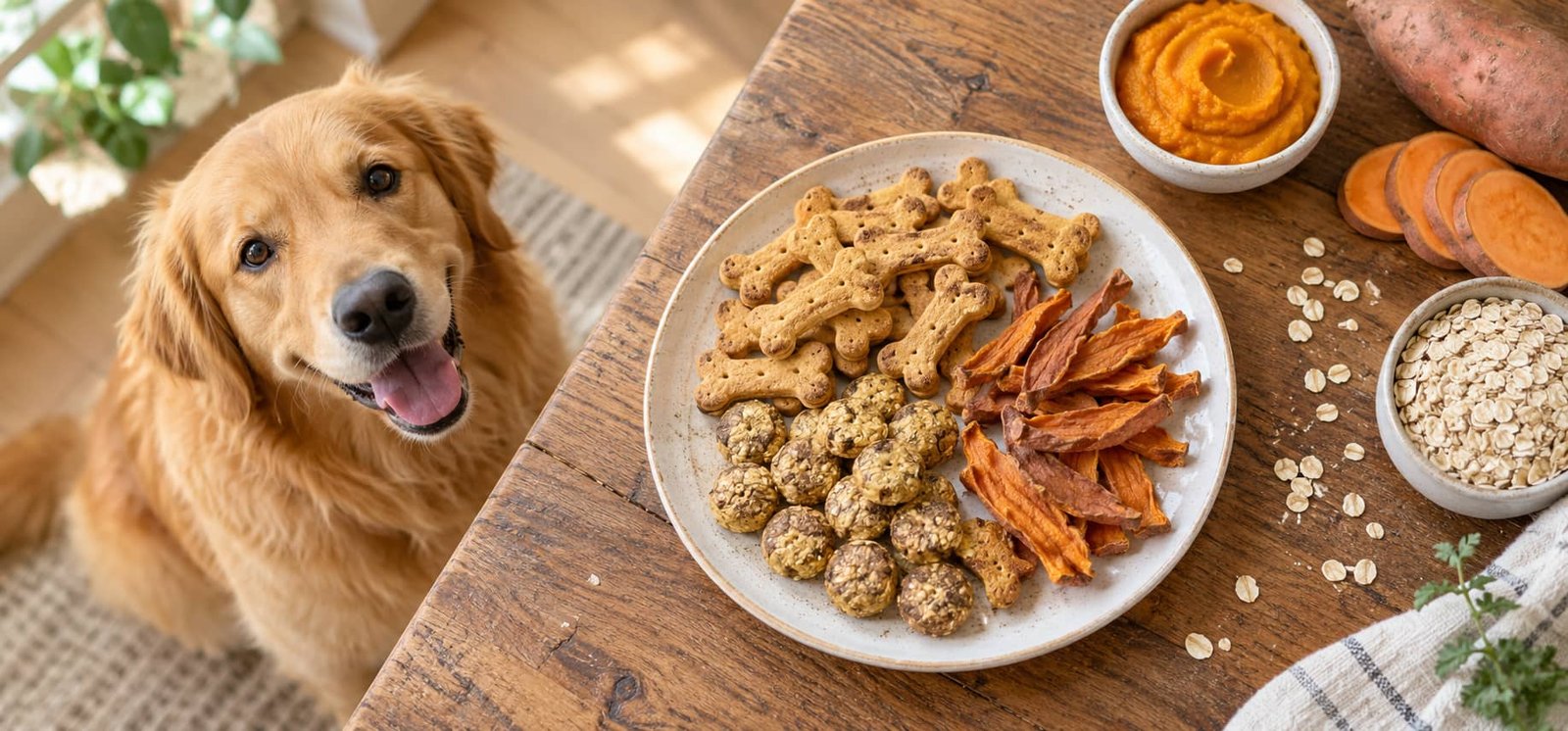
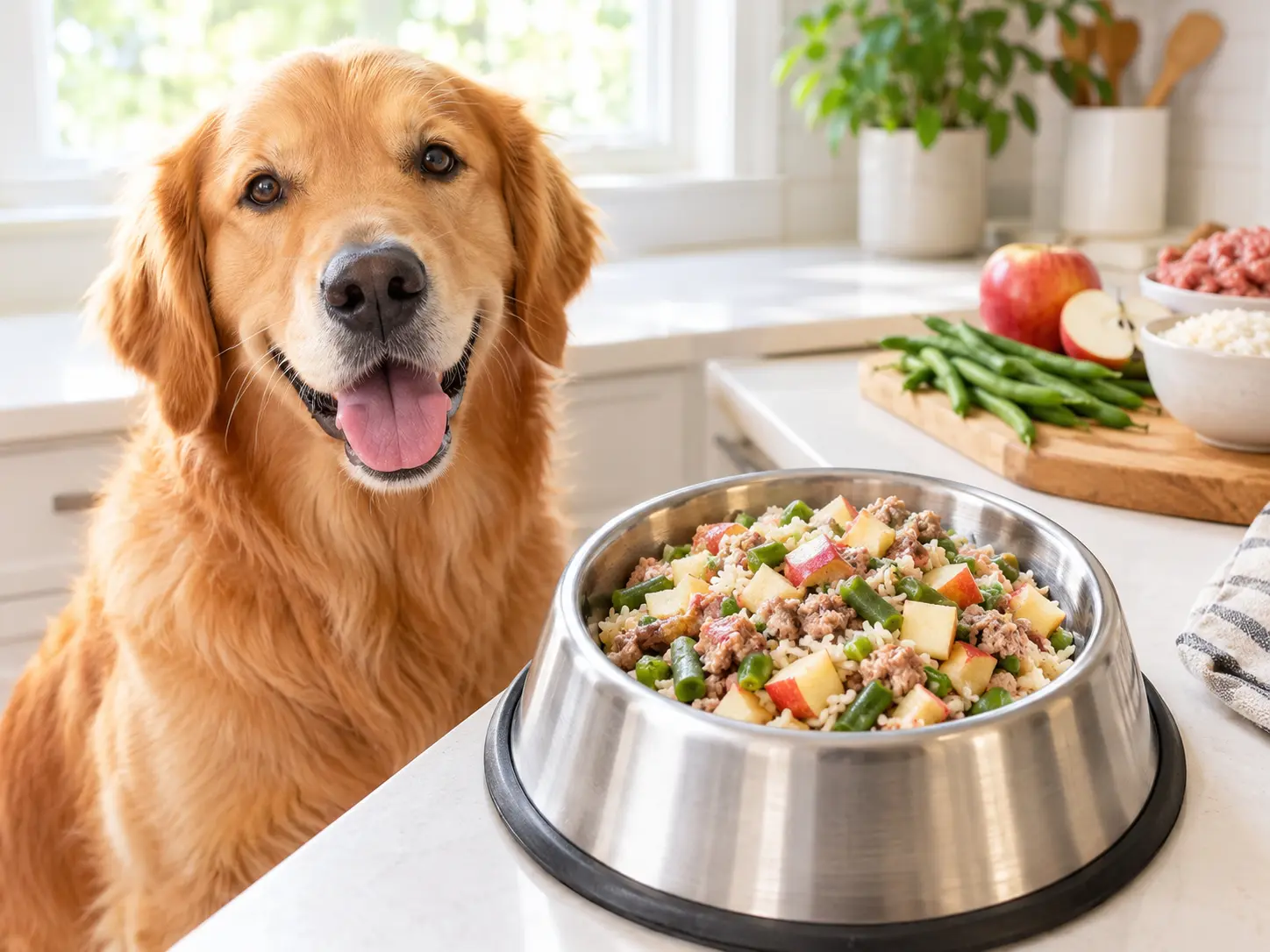
If your dog loves fresh, gently cooked meals, a copycat Farmer’s Dog recipe lets you make something similar in your own kitchen. This homemade dog food combines lean pork, crisp apples and green beans into a soft, easy-to-digest meal that many dogs enjoy. You choose every ingredient, you control the cost, and you know exactly what goes into the bowl.
In this guide you will learn what fresh dog food is whether cooking at home is a good idea, how to make the recipe step by step, how to store it, and how to keep the meal nutritionally balanced.
What Is The Farmer’s Dog, and Why Do People Copy It?
The Farmer’s Dog is a US company that delivers fresh, lightly cooked dog food on a subscription plan. The meals are made with real meat and vegetables, portioned for each dog, and kept cold until feeding time. Because the food looks like something you might cook for your own family, many owners find it more appealing than dry kibble.
The main drawbacks are cost and commitment. A subscription for a medium or large dog can add up quickly. That is why so many owners search for a homemade fresh dog food recipe that offers a similar style of meal: real protein, soft vegetables and a simple cooking method.
A copycat recipe is not an exact match for any commercial product. It is a home-cooked meal inspired by the fresh-food idea, made with ingredients you can buy at a regular grocery store.
Is Homemade Dog Food a Good Idea?
Homemade meals can work well for many dogs, but they are not automatically better than commercial food. It helps to look at both sides.
Benefits of cooking for your dog
- You know every ingredient and can avoid additives and fillers.
- You can adjust the recipe for a picky eater or a dog with simple preferences.
- Fresh, moist food is often more appealing than dry kibble.
- Batch cooking can be affordable when you buy ingredients in bulk.
Things to watch out for
- Cooking takes time, especially if you prepare several days of meals at once.
- Dogs need a complete and balanced diet, including calcium, essential fatty acids, vitamins and minerals. A recipe made only from meat and vegetables can fall short over time.
- Puppies, senior dogs, pregnant dogs and dogs with health problems have special needs.
Before you switch your dog to a homemade diet, talk with your veterinarian. If you plan to feed home-cooked meals regularly, ask about a veterinary nutritionist or a balanced supplement designed for homemade diets.
Why Pork, Apples and Green Beans Work Well Together
Each ingredient in this recipe has a clear role.
Lean pork is a protein source that many dogs find tasty. Choose lean ground pork or small pieces of pork loin, and cook it thoroughly. Protein supports muscle maintenance, and lean cuts keep the fat level lower than fatty cuts.
Apples add natural sweetness, a little fiber and moisture. Always remove the core and seeds, and cut the fruit into small pieces. Apples should be a small part of the meal, not the main ingredient.
Green beans are low in calories and provide fiber, which can help a dog feel full. Plain green beans, fresh or frozen, are a popular choice in homemade dog food. Avoid canned beans with added salt.
To make the meal more filling and add gentle energy, this recipe also includes cooked rice and carrots.
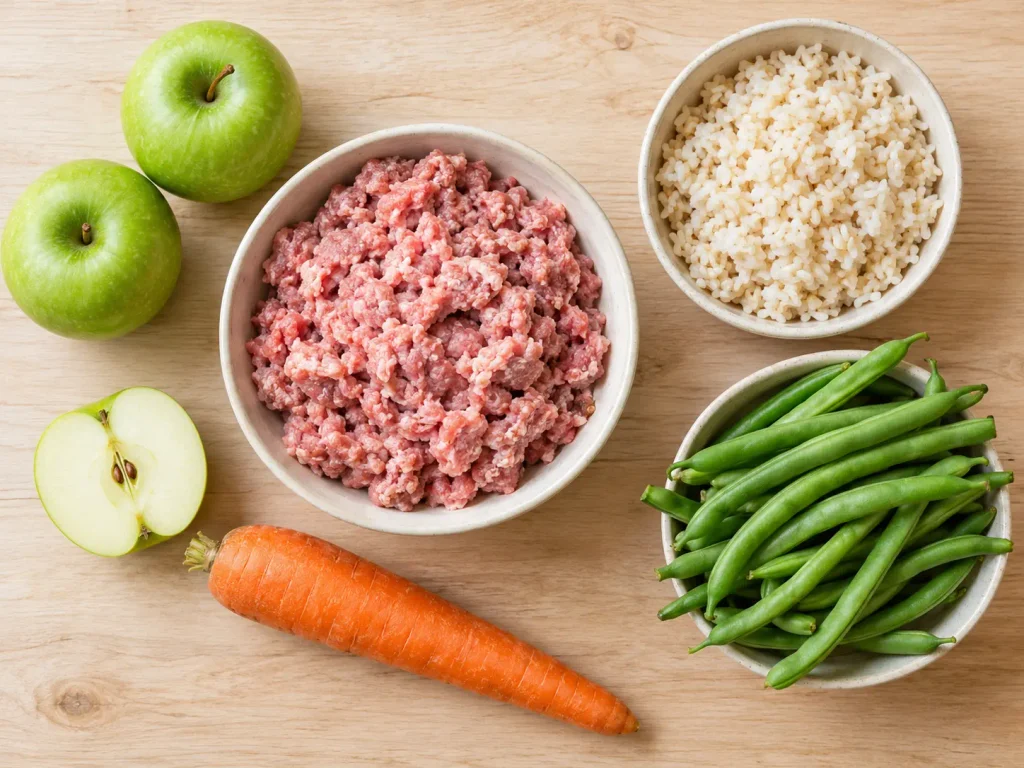
Ingredients for the Copycat Farmer’s Dog Recipe
This recipe makes about 8 to 10 cups of food, enough for several meals for a medium-sized dog.
- 2 pounds lean ground pork (no seasoning)
- 2 cups cooked white or brown rice
- 2 cups green beans, chopped (fresh or frozen, no salt)
- 2 medium apples, cored, seeds removed, and finely diced
- 1 large carrot, grated or finely chopped
- 1 cup water or low-sodium, onion-free broth
- 1 tablespoon fish oil or another vet-approved oil (optional)
Use plain ingredients only. Do not add salt, pepper, garlic, onion or any sauces.
How to Make Homemade Pork, Apple and Green Bean Dog Food
Step 1: Prepare the vegetables and fruit. Wash everything. Chop the green beans into small pieces, grate the carrot, and dice the apples after removing the core and every seed.
Step 2: Cook the rice. Cook the rice according to the package directions, using plain water. Let it cool slightly.
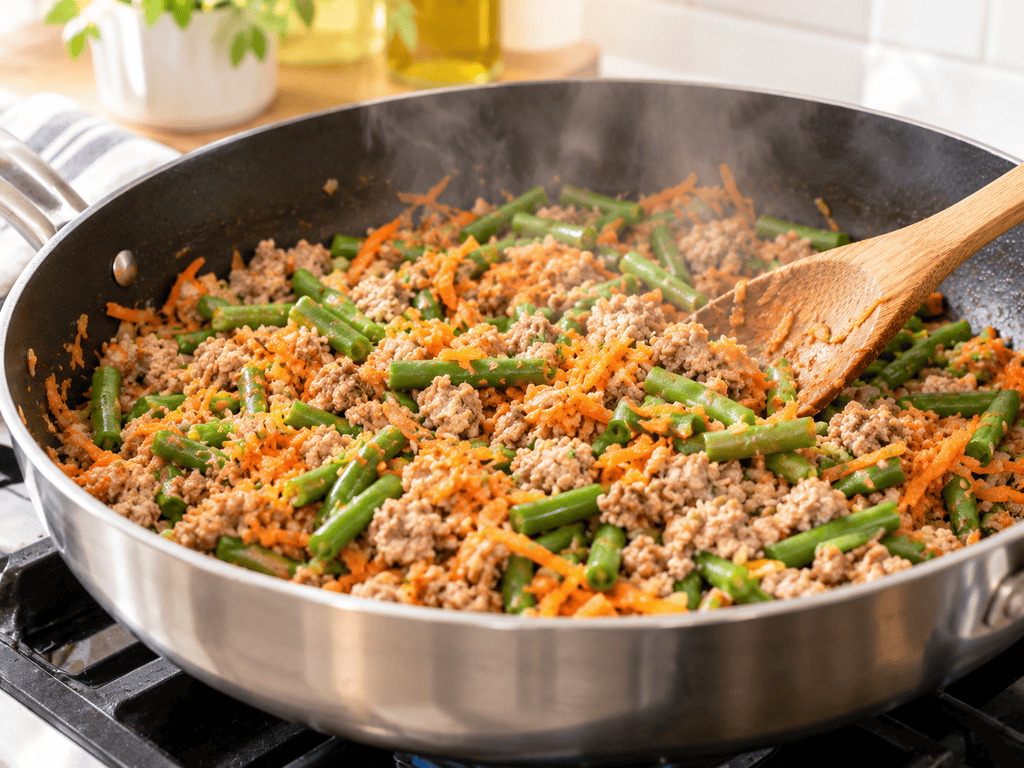
Step 3: Cook the pork. Brown the ground pork in a large pan over medium heat, breaking it into small crumbles. Cook until no pink remains. Pork must always be fully cooked before feeding. If there is a lot of fat in the pan, drain most of it off.
Step 4: Soften the vegetables. Add the green beans, carrot and water to the pan. Cover and simmer for about 10 minutes, until the vegetables are tender.
Step 5: Add the apples. Stir in the diced apples and cook for another 3 to 5 minutes, until they are soft.
Step 6: Mix and cool. Combine the cooked rice with the pork and vegetable mixture. Add the oil if you are using it. Let the food cool completely before serving. Hot food can burn a dog’s mouth.
Tip: For small dogs or dogs with sensitive teeth, mash or pulse the mixture briefly in a food processor for a softer texture.
Foods to Avoid in Homemade Dog Food
Some ingredients that are safe for people are harmful to dogs. Keep these out of the recipe and out of your dog’s bowl:
- Onions, garlic, chives and leeks
- Grapes and raisins
- Apple cores and seeds
- Salt, spices, sauces and seasoning blends
- Bacon, ham, sausage and other processed pork
- Cooked bones, which can splinter
- Chocolate, xylitol (a sweetener found in many foods) and alcohol
If you are unsure about an ingredient, check with your vet before adding it. Our guide to the best vegetables for dogs can help you choose safe vegetable swaps.
How Much Should You Feed?
The right portion depends on your dog’s weight, age, breed, activity level and health. Many owners use a general starting point of roughly 2 to 3 percent of a dog’s body weight in food per day, split into two meals. This is only a starting estimate, and some dogs need more or less.
Watch your dog’s body condition over the next few weeks. If your dog gains too much weight, reduce the portion. If your dog seems too thin or low on energy, speak with your vet. Always confirm the daily amount with a professional, particularly for puppies and seniors.
How to Switch Your Dog to Homemade Food
Sudden food changes can upset a dog’s stomach. Switch gradually over about 7 to 10 days:
- Days 1 to 3: about 25 percent homemade food, 75 percent current food.
- Days 4 to 6: half and half.
- Days 7 to 9: about 75 percent homemade food.
- Day 10: fully homemade, if your dog is doing well.
If your dog has vomiting, diarrhea or loses interest in eating, slow down and contact your vet.
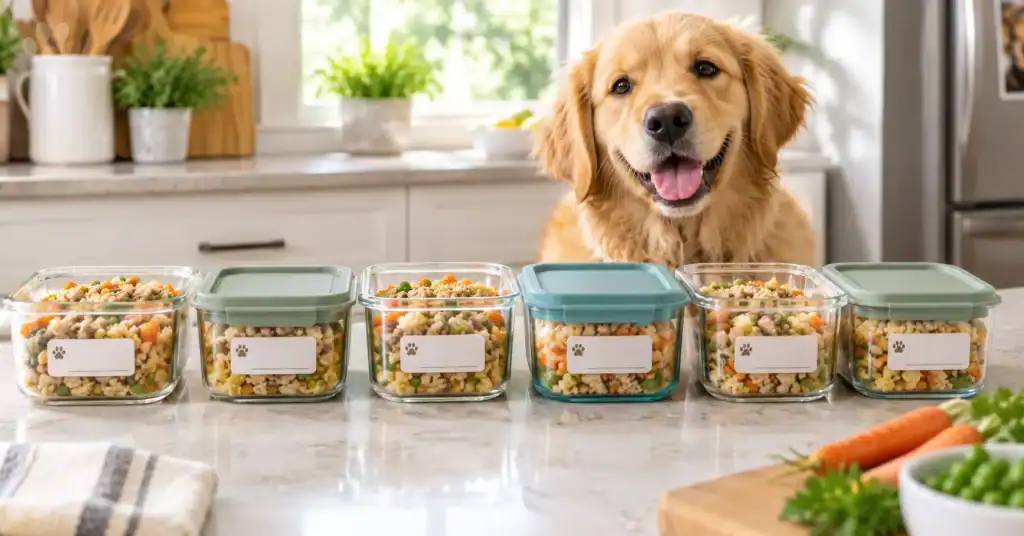
How to Store and Meal Prep the Recipe
One of the biggest advantages of this recipe is that it stores well.
- Refrigerator: store in an airtight container for up to 3 to 4 days.
- Freezer: divide into single-meal portions in freezer-safe containers or silicone trays. Frozen portions keep well for up to about 3 months.
- Thawing: move a portion from the freezer to the refrigerator the night before. Do not leave it out on the counter for hours.
If you have a slow cooker, you can also try our crockpot dog food recipe for another easy batch-cooking option.
Short on time on busy days? A slow cooker can do most of the work for you. Our crockpot dog food recipe shows how to cook a big batch with very little effort, and you can freeze the portions the same way
How to Make the Meal Nutritionally Balanced
This is the most important part of any homemade dog food plan. Fresh ingredients look healthy, but dogs need specific nutrients in the right amounts. Homemade diets most often fall short in calcium, certain vitamins and essential fatty acids.
To keep your dog healthy:
- Ask your vet whether this recipe suits your dog’s age and health.
- Consider a supplement made for homemade diets, or work with a board-certified veterinary nutritionist to create a complete recipe.
- Rotate lean proteins and vegetables over time, with your vet’s guidance, for variety.
- Schedule regular checkups to monitor weight and overall health.
Think of this recipe as a starting point for a fresh meal, not a complete answer to your dog’s nutritional needs without professional input.
Frequently Asked Questions
Is homemade dog food cheaper than The Farmer’s Dog? It can be, especially for larger dogs, because you buy ingredients yourself and cook in batches. The savings depend on local prices and on whether you add a balanced supplement.
Can dogs eat pork? Yes, plain, lean and fully cooked pork is generally safe for most dogs. Avoid fatty cuts, seasoned meat and processed pork such as bacon or ham.
Can I swap the vegetables? Yes. Carrots, peas, pumpkin and sweet potato are common alternatives. Check that each ingredient is safe for dogs and introduce new foods slowly.
Can puppies eat this recipe? Puppies have strict nutritional needs for growth. Ask your vet before feeding any homemade recipe to a puppy.
How long does it last in the fridge? About 3 to 4 days in a sealed container. Freeze extra portions for longer storage.
Final Thoughts
This copycat Farmer’s Dog recipe gives you a simple way to cook fresh, wholesome meals for your dog with pork, apples and green beans. It is easy to batch, easy to freeze, and made with ingredients you can find at any grocery store. The key to success is balance: keep the ingredients plain and safe, add the nutrients your dog needs with your vet’s help, and introduce the new food slowly.