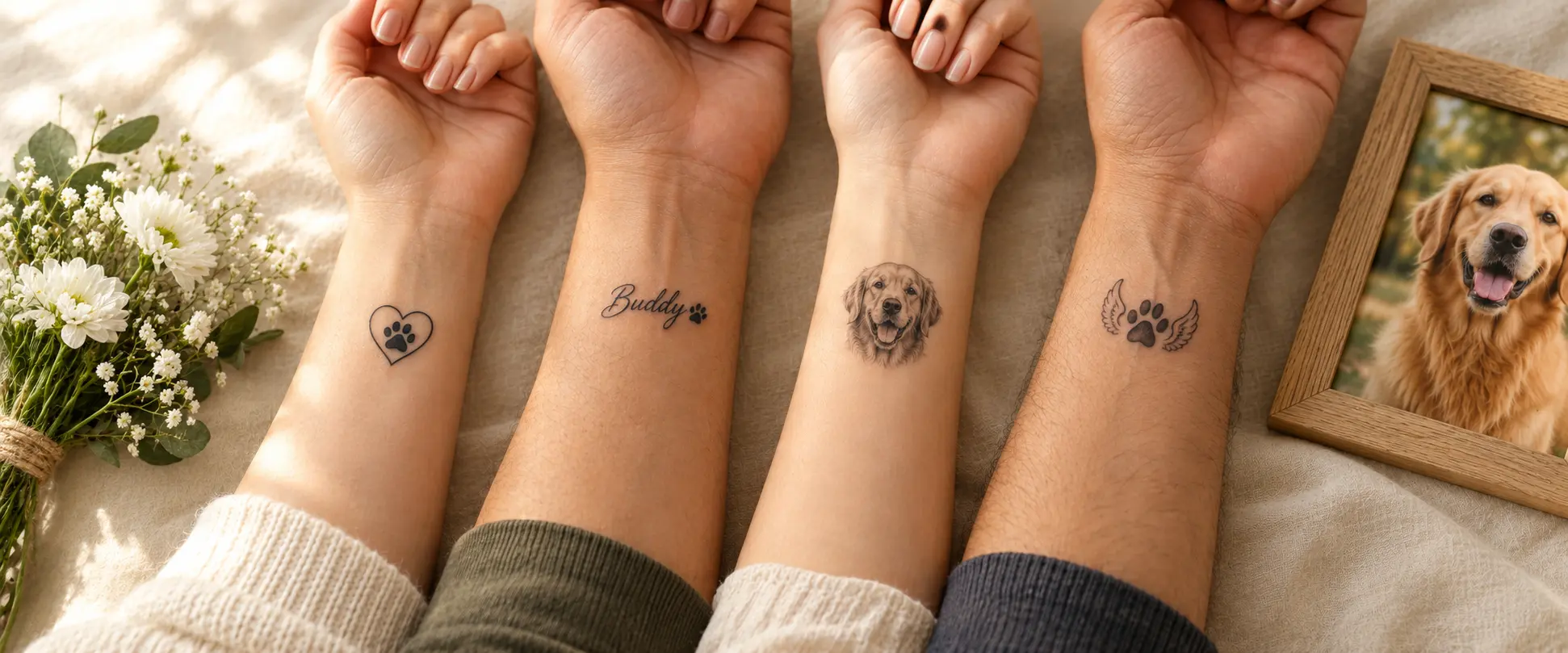
Dog memorial tattoos are a lasting way to honor the bond you shared with your dog. Losing a dog leaves a quiet space in your home and heart, and many people find comfort in carrying a small tribute on their skin. Whether you want a simple paw print or a detailed portrait, the right design can reflect your dog’s personality and the love they brought into your life. This guide shares four heartfelt dog memorial tattoo ideas, plus practical tips on placement, choosing an artist, and aftercare.
Why People Choose Dog Memorial Tattoos
A pet memorial tattoo turns grief into something you can see and keep. Unlike a photo on a shelf, it stays with you every day, which many people find comforting during the early weeks of pet loss.
There is no right or wrong reason to get one. Some people want to celebrate a long, happy life together. Others want a quiet reminder of a loyal companion who helped them through hard times. A memorial tattoo for a dog can also be a way to start healing, as long as you take your time and choose a design that feels right.
Because these tattoos are permanent, it helps to wait until the first wave of grief has softened. Give yourself time to think about what your dog meant to you, then pick a design that feels like a gentle tribute rather than a rushed decision.
Idea 1: Paw Print Inside a Heart

A paw print inside a heart is one of the most popular dog memorial tattoos, and it’s an easy first choice. It says “my dog, my heart” in a clean, simple way.
Fine-line black ink keeps the design delicate, and the small size works well on the inner forearm, wrist, or ankle. You can use your dog’s real paw print as the base, which makes the tattoo truly unique. Many vet clinics can take an ink paw print impression, and a tattoo artist can trace it into a stencil.
To personalize it, add a tiny date, a set of initials, or a small flower inside the heart. This design suits anyone who wants a meaningful but understated pet memorial tattoo that fits easily into everyday life.
Idea 2: Dog’s Name in Script with a Paw Print

A name tattoo keeps your dog’s identity at the center of the design. Write the name in elegant cursive, or copy your own handwriting from a card or a note to make it more personal.
Pair the name with a tiny paw print, a small bone, or a line such as “forever loved.” Placement on the inner wrist, collarbone, or shoulder works well, because script reads best on a smooth, flat area.
If your dog had a nickname, you could use that instead. Some people also choose to add the years of their dog’s life underneath. This idea is a good fit for fine-line tattoos, which age gracefully when done by an experienced artist.
Idea 3: Realistic Dog Portrait

A portrait tattoo captures the face you loved most: the soft eyes, the tilted ears, the exact markings. Black-and-grey realism is the most common style for these dog memorial tattoos because it gives depth and detail without relying on color.
This is the most detailed option, so choose a larger area such as the calf, thigh, or upper arm. Share several clear photos with your artist, including close-ups of the eyes and fur texture, so the final result looks like your dog and not just any dog.
Realistic portraits take longer and cost more than simple designs, but they can feel deeply personal. If you want something less intense, an artist can also create a softer illustrated portrait with fewer details.
How to Choose Placement and Size
Placement changes how a tattoo looks and feels, so think about where you want to see it and who you want to share it with.
- Visible spots such as the forearm or wrist make it easy to look at your tattoo and remember your dog.
- Private spots such as the ribs, shoulder, or upper arm keep the tribute personal.
- Small tattoos (about 2-3 inches) suit paw prints, names, and simple symbols.
- Larger tattoos suit portraits and designs with lots of detail.
Fine details can blur over time on very small tattoos, so ask your artist whether your design will still look sharp in ten years. Where you place it also affects how much it will hurt, with bony areas generally feeling more sensitive than fleshy ones.
Finding the Right Tattoo Artist
Good dog memorial tattoos depend on a skilled artist. Look for someone whose portfolio matches your chosen style, whether that’s fine-line, black-and-grey realism, or lettering.
Check reviews, look at healed tattoos and not just fresh ones, and make sure the studio follows strict hygiene practices. Book a consultation first, bring your reference photos, and talk through the design before you commit. A good artist will listen, suggest changes, and never pressure you to rush.
Aftercare Tips for Your Memorial Tattoo
Proper aftercare helps your tattoo heal well and keeps the lines crisp. Your artist will give you instructions, and you should follow those first. In general, you will keep the tattoo clean, avoid picking or scratching it, protect it from direct sun and soaking in water, and apply a thin layer of recommended ointment or lotion.
Once healed, use sunscreen on the area to keep the ink from fading. If you notice unusual redness, swelling, or discharge, contact your artist or a doctor.
Other Ways to Honor Your Dog
If you’re not ready for a tattoo, there are other gentle ways to keep your dog close: a framed photo, a paw print keepsake, a memorial garden stone, a piece of jewelry, or a donation to an animal shelter in your dog’s name. You can also create a small corner of your home for their memory, with a favorite toy or collar. Many people later decide to add a tattoo once they feel ready.
If you want more inspiration beyond memorials, browse these dog tattoo ideas for every style and personality.
Final Thoughts
Dog memorial tattoos are a personal way to carry your dog’s love with you. A paw print heart, a name in script, a realistic portrait, or paw prints with angel wings can each tell a different part of your story. Take your time, choose a design that feels like your dog, and work with an artist you trust. Your tattoo will become a small, lasting reminder of the loyal friend who shared your life.