

Your dog ignores “come” at the park, pulls on every walk, and treats the sofa as a trampoline. It is tempting to decide that you have a stubborn dog. Usually, though, the real culprit is a set of well-meant owner habits that confuse the dog instead of guiding it. Dogs are eager learners, but they can only learn what we actually teach, and that is often not what we think we are teaching. This guide covers five common dog training mistakes to avoid, explains why each one backfires, and shows what to do instead, using methods that behaviorists and certified trainers recommend. Whether you have a new puppy or an adult rescue, small changes in how you communicate can make everyday life calmer for both of you.
Mistake 1: Being Inconsistent with Rules and Cues
Dogs learn by pattern and association. If one person says “down,” another says “off,” and a third lets the dog jump up because they’re in a good mood, the dog cannot work out which behavior earns a reward. Mixed signals also teach dogs that rules depend on mood, so they keep testing the limits to see what will happen this time.
Inconsistency often hides in small moments. Maybe your dog is never allowed on the bed, except on lazy Sunday mornings. Maybe begging at the table is forbidden, until a guest slips a bite under it. To your dog, an occasional payoff is the most powerful kind, much like a slot machine that pays out just often enough to keep someone pulling the lever. The result is a dog that tries harder, not one that gives up.
Words matter too. A dog does not understand sentences, only sounds paired with outcomes. “Sit,” “sit down,” and “sit, sit, come on, sit!” are three different sounds to your dog.

What to do instead:
- Choose one verbal cue (and, if you like, one hand signal) for each behavior, and make sure everyone in the household uses it.
- Agree on boundaries early: furniture access, begging at the table, door manners, and who feeds the dog.
- Apply the same expectations every day, including weekends and when visitors arrive.
- Write the cues on a note on the fridge until the whole family has them memorized.
Mistake 2: Punishing Instead of Rewarding
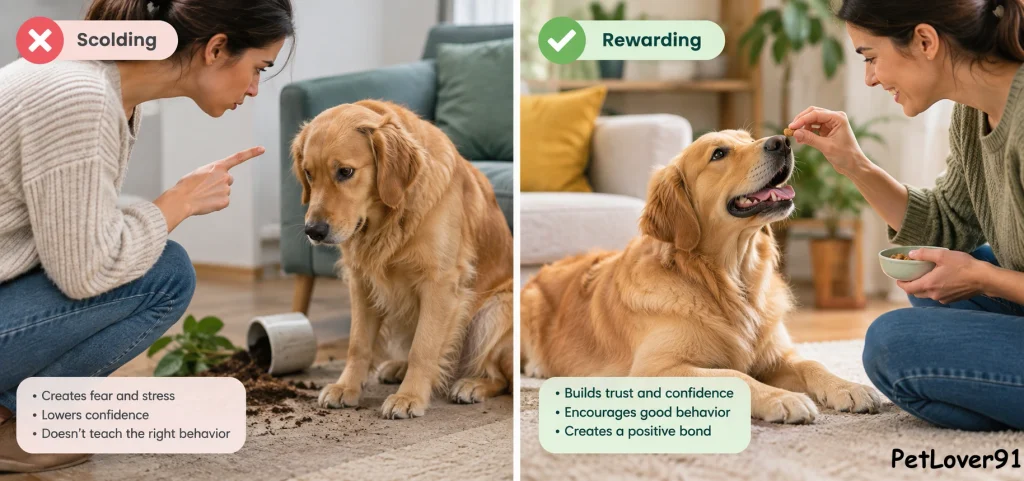
Yelling, leash jerks, or scolding may interrupt unwanted behavior for a moment, but they do not teach the dog what to do instead. They can also create fear, stress, and mistrust, which slow all later learning. A dog that is anxious about making a mistake is less willing to try new things, and trying new things is exactly how dogs learn.
Dogs repeat behavior that pays off. When a calm sit earns a treat, praise, or a game of tug, the dog chooses that behavior again on its own. This is the principle behind positive reinforcement and reward-based training, and research on canine behavior consistently links it to faster progress and a stronger bond between dog and owner. Harsh methods, by contrast, have been associated with more stress signals and, in some dogs, a higher risk of fear-driven aggression.
It also helps to look at the “why” behind a problem. A dog that barks at the window may be bored, a dog that chews shoes may be teething, and a dog that pulls on the leash may simply be excited to explore. Punishing the symptom leaves the cause untouched.
What to do instead:
- Catch your dog doing something right and reward it immediately. Calm behavior is easy to overlook, so make a habit of noticing it.
- Redirect instead of reprimanding. If your dog chews a shoe, calmly trade it for a chew toy and praise the switch.
- Manage the environment. Put shoes out of reach, use a baby gate, or close a door so your dog cannot practice the habit you’re trying to change.
- Keep small, soft, high-value treats within reach so rewards are quick and easy.
Mistake 3: Getting the Timing Wrong
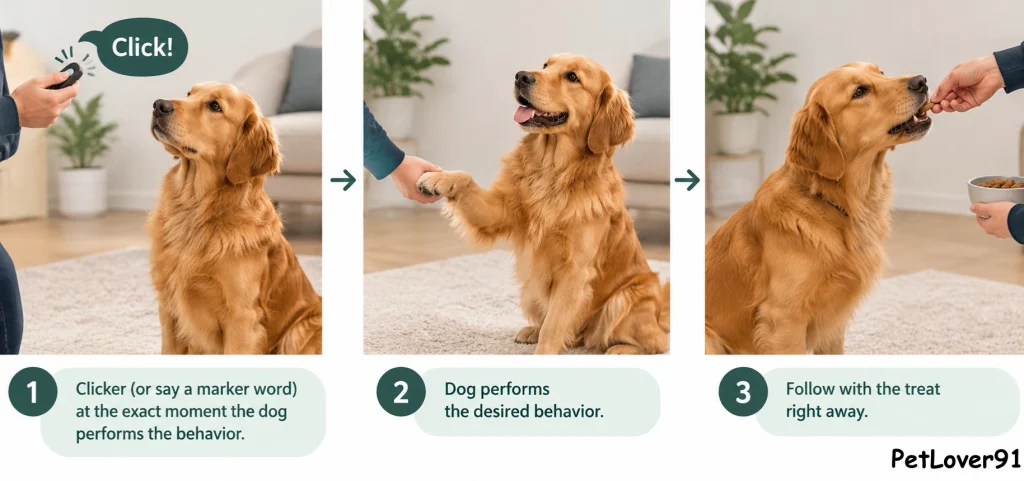
A dog’s sense of cause and effect is short. A reward or correction that arrives even a few seconds late can attach to the wrong action. If you call your dog over and then scold it for something it did earlier, it learns that coming to you means trouble. That is one of the fastest ways to build a dog that will not come when called.
The same goes for rewards. If your dog sits, then stands up, and only then gets the treat, the treat has rewarded standing. Over time, this muddy timing makes behaviors sloppy and unreliable.
The famous “guilty look” many owners notice is usually a reaction to your tone and body language, not an understanding of what happened. Dogs are very good at reading human posture and mood, so a dog may look ashamed because you are upset, even if it has no idea why.
What to do instead:
- Mark the correct behavior within one to three seconds, using a clicker or a short marker word like “yes,” then deliver the treat. Marking tells the dog exactly which action earned the reward.
- If you find a mess after the fact, clean it up quietly and focus on preventing the next one. A scolding at that point teaches nothing.
- Prepare your treats before each session so your timing is not delayed while you search your pockets.
- Practice the marker on its own for a few minutes: say “yes,” give a treat, repeat. Soon the word itself becomes a small celebration.
Mistake 4: Overlooking Exercise, Socialization, and Mental Enrichment
A bored, under-exercised dog finds its own entertainment: digging, barking, shredding cushions, raiding the bin. No amount of cue practice can offset a dog sitting on a pile of unused energy. Before blaming training, ask whether the dog’s basic needs are being met.
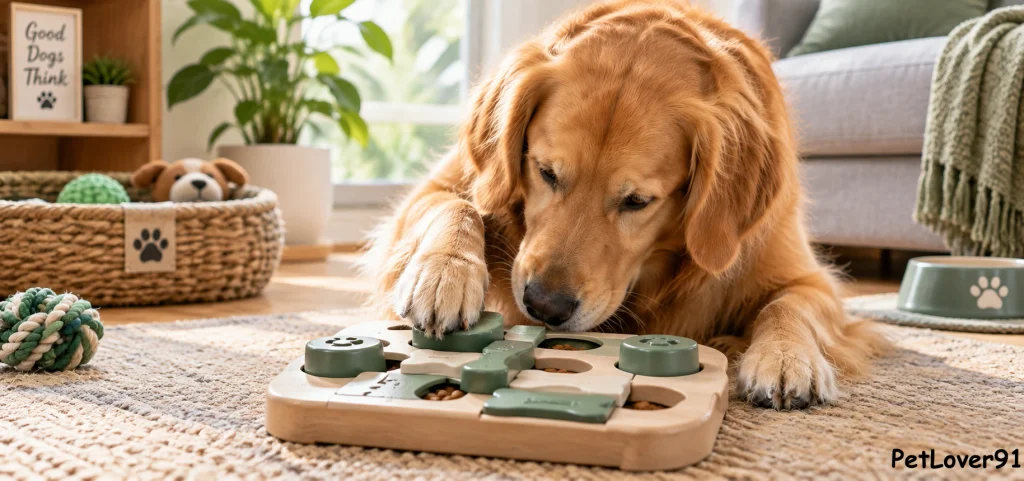
Physical exercise is only half of the picture. Mental effort tires a dog out in a different, often deeper way. Ten minutes of sniffing, searching, or problem solving can be more satisfying than a rushed walk around the block. Letting your dog sniff on walks is not wasted time. It is how dogs gather information and settle their minds.
Social experience matters just as much. Puppies that meet few people, places, surfaces, and other dogs during their early months (roughly the first three to four months of life) are more likely to develop fear or reactivity later. Adult dogs benefit from continued, calm exposure too, especially if they have a limited background.
What to do instead:
- Match daily activity to age and breed. A border collie needs far more than a senior bulldog, and a young retriever needs more than an elderly terrier.
- Add mental work such as puzzle feeders, scent games, snuffle mats, and short trick sessions. Scattering part of a meal in the grass is a simple, free option.
- Introduce new experiences gradually and positively. Let your dog set the pace, and reward calm curiosity.
- Check with your vet about vaccination status before visiting busy dog areas, and ask about puppy classes that are run safely.
Mistake 5: Expecting Too Much, Too Fast
Many owners practice for long stretches, repeat the same cue again and again, or jump to advanced skills before the basics are solid. The dog tires, gets confused, and the owner gets frustrated. Every dog learns at its own pace, shaped by age, breed, background, and personality, and setbacks are completely normal.
One common surprise is that dogs do not generalize well. A dog that sits perfectly in the kitchen may act as if it has never heard the word at the park. That is not defiance. The park is simply a new place full of smells, sounds, and distractions, and the dog needs to relearn the cue there.
Repeating a cue over and over causes another problem. If you say “sit” five times before the dog responds, the dog learns that the first four requests are optional. Calm patience teaches far more than rising volume.
What to do instead:
- Keep sessions to about five to ten minutes, once or twice a day. Short and happy beats long and tense.
- Give a cue once, then wait a few seconds. If your dog does not respond, help it succeed with a lure or by moving closer, then try again.
- Build in steps: practice indoors, then in the yard, then somewhere busier, raising the difficulty only when your dog is succeeding most of the time.
- End on a success, even a small one, so training stays enjoyable for both of you.
Quick Recap
| Mistake | Why it fails | Better approach |
| Inconsistent rules | The dog can’t tell what is expected | One cue per behavior, shared household rules |
| Punishing instead of rewarding | Creates fear and doesn’t show the right behavior | Reward good choices, redirect the rest |
| Poor timing | The dog links the response to the wrong action | Mark the behavior within seconds |
| Skipping exercise and socialization | Pent-up energy and anxiety drive bad habits | Daily activity, enrichment, safe exposure |
| Expecting too much too fast | Dogs get tired, confused, and stuck | Short sessions, small steps, patience |
Frequently Asked Questions
How long does it take to train a dog?
Basic cues like sit and come often take a few weeks of regular practice, but reliable behavior around distractions can take months. Training is ongoing, and consistency matters more than speed.
Can you train an older dog?
Yes. Adult and senior dogs can learn new skills at any age. Sessions may need to be shorter and gentler, and you may need to work around physical limits, but they respond well to rewards just like younger dogs.
How often should I train my dog each day?
Two or three short sessions beat one long one. You can also weave practice into daily life, such as asking for a sit before meals or before opening the door.
When should I hire a professional trainer?
If your dog shows aggression, intense fear, leash reactivity, or separation anxiety, or if progress stalls despite steady effort, a certified professional dog trainer or a veterinary behaviorist can help. Sudden behavior changes can also have a medical cause, so a vet check is worth it.
Final Thoughts
Most of the common dog training mistakes to avoid come down to good intentions applied the wrong way. Be consistent, reward what you want, time your feedback well, meet your dog’s needs for exercise and company, and allow room to learn. Pick just one of these to fix this week, and you will likely see a difference quickly. Patience and kindness do more than any trick, and the trust you build along the way is what makes every other lesson stick.